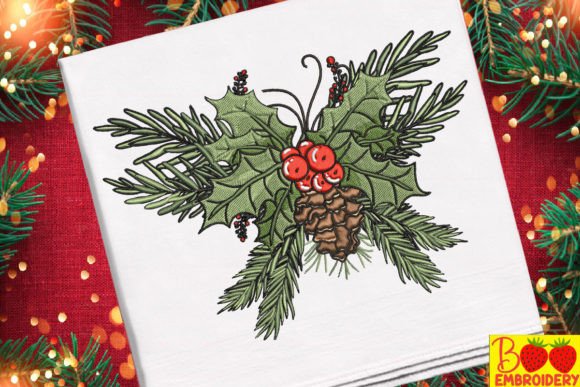
Christmas Pine Branch: A Designer’s Honest Review
I loaded the Christmas Pine Branch design last Tuesday morning with a specific project in mind. A local boutique had ordered two dozen natural‑colored canvas tote bags, each needing a festive but understated embroidery panel. As the file opened on my software screen, I immediately recognized the kind of artwork that separates a rushed seasonal craft from a deliberate, gift‑ready product. The branch’s silhouette felt balanced—not too sparse, not overly dense with needles. It gave me the quiet confidence you want when you have 24 hoops to run before dinner.
First Glance: Mood, Shape, and Stitch Personality
The Christmas Pine Branch carries a gentle, wintry presence. Instead of shouting “holiday” with bright red bows or glitter, it leans on the natural curve of a pine sprig. That restraint is valuable. The design appears to use a mix of satin and fill stitches to define the needles, while the branch itself likely relies on a running stitch or lighter fill for structure. From a craft business perspective, this means the final stitch‑out will read as clean, tactile, and slightly textured—exactly what you want on a premium handmade product.
What struck me most was the layout. The branch sweeps diagonally in many previews, creating a dynamic line that naturally draws the eye across a garment. That diagonal movement works beautifully on tote bags, sleeve cuffs, and even the yoke of a denim shirt. It also leaves room for personalization. I could see a subtle name or a short winter quote stitched nearby without the whole composition feeling crowded.
Projects That Nail the Understated Holiday Look
Not every Christmas embroidery needs a full Santa scene. The Christmas Pine Branch fits a quieter, more versatile category. I mentally cataloged where this design would perform best, and the list grew quickly.
Custom Apparel With Year‑Round Potential
A pine branch doesn’t scream December 25. It whispers “winter,” and that extends its selling window. I’ve tested similar motifs on heavyweight cotton sweatshirts in dark heather gray. The green thread pops beautifully, and customers often wear these pieces well into February. For baby garments—think tiny rompers or knit beanies—the design scales down well, though you’ll want to check the smallest hoop size compatibility. A delicate pine sprig on a baby bodysuit feels both charming and sophisticated, far more giftable than a cartoon elf.
Home Decor and Gift‑Ready Linens
Kitchen towels and linen pillow covers are where this design truly flexes its craft‑fair appeal. I hooped a flour‑sack towel as a test, using a medium‑weight cutaway stabilizer. The branch stitched out with crisp needle definition, none of the blurring that plagues overly dense designs on loosely woven fabric. Paired with a simple border or a subtle monogram, a set of towels becomes a high‑perceived‑value gift. The same applies to apron bibs or the corner of a table runner. The Christmas Pine Branch adds seasonal flavor without overwhelming the item’s everyday function.
Where Stitch Logic and Fabric Choices Clash
My practical side always asks: where will this design misbehave? After years of troubleshooting, I’ve learned to identify potential friction points before a needle ever drops.
The first concern is thin, stretchy fabric. A pine branch typically includes a fair amount of fill stitching for the needles. On a lightweight jersey t‑shirt, that can lead to puckering or a stiff, cardboard‑like patch. I’d only use this on knits with a proper no‑show mesh stabilizer and possibly a water‑soluble topper to keep the stitches above the fabric’s texture. Test on scraps first—always.
Dark backgrounds are another quiet risk. The green thread can sink into a black or deep navy fabric, losing that vibrant needle silhouette. If you’re stitching the Christmas Pine Branch on a dark tote or a charcoal sweatshirt, do a thread contrast test. You might need a slightly lighter green than you expect, or even a subtle outline stitch to define the shape. I’ve made that mistake with a pine cone design before, and the result looked more like a smudge than a botanical detail.
Curved surfaces—caps, in particular—deserve extra attention. The branch’s elongated form may require careful placement to avoid bending awkwardly along a cap’s seam. If your embroidery field is limited, you might lose the branch tips. Always measure the design’s longest dimension against your hoop’s usable area, not just the advertised size.
The Customer Appeal Equation
Here’s the truth: a well‑embroidered pine branch on a simple tote bag makes the product look three times its raw material cost. This design has what I call “quiet professionalism.” It’s not flashy, but it signals intentionality. When a customer receives a linen pillow with a neat, evenly stitched Christmas Pine Branch, they perceive the item as a small‑batch art piece, not a mass‑printed reject.
For Etsy sellers, this translates directly into trust and repeat purchases. Listing photos that show a clean branch stitch on a natural fabric draw in buyers searching for “modern Christmas decor” or “minimalist holiday embroidery.” The design works for baby announcements, wedding thank‑you gifts, boutique shop merchandise—any context where you want the handmade aspect to feel elevated, not clunky.
From a branding standpoint, the Christmas Pine Branch can become a subtle signature. I’ve seen small shops use a single botanical motif across multiple product lines (tea towels, zip pouches, cardstock gift tags) to create visual consistency. The design’s organic shape lends itself well to mockups and print‑on‑demand previews too, if you plan to offer digital product listings alongside finished work.
My Standard Workflow Before Any Production Run
Before I ever hoop a client’s garment, I have a ritual. With the Christmas Pine Branch, these steps would be non‑negotiable:
- Check the stitch density preview in your embroidery software. Look for overly thick needle clusters that might cause thread breaks or stiff patches.
- Test on the exact fabric blend you intend to use, with the same stabilizer stack. Cotton canvas reacts differently than a polyester‑cotton blend.
- Evaluate thread colors under natural light. Greens can shift dramatically. Hold the spool against a white background and a dark background to see how it reads.
- Run a black‑and‑white mockup (or grayscale printout) to see if the branch’s shape holds up without color. Good design structure remains recognizable in monochrome.
- Confirm the hoop size with the actual file dimensions. Don’t rely on the product listing’s vague “4x4 inch” unless you’ve verified it. Measure the digital file’s width and height.
- Stitch a scrap test with all the finishing steps—trimming, pressing, and a gentle wash cycle. That reveals weakening in the branch’s thinner stitch areas.
- Review commercial licensing before selling finished items. The listing mentions this design works for “Christmas gifts” and “commercial embroidery,” but I always check the exact license terms. Some designs restrict digital resale or require credit.
Stabilizer choice deserves its own footnote. For sturdy woven bags and linens, a cutaway medium‑weight stabilizer works. For apparel that needs a softer hand, a tear‑away with a fusible backing can prevent show‑through on light fabrics. If the branch includes satin stitch borders along the needles, those will compress more easily under tension, so a firm hooping is critical.
Small Details That Multiply the Value
What makes the Christmas Pine Branch a smart design asset, rather than just a decorative pattern, is its ability to pair with other techniques. I can imagine using a tonal thread—forest green on a sage linen—for a tone‑on‑tone effect that looks incredibly upscale. Adding a few French knots by hand after the machine run can give the branch an artisanal, mixed‑media texture. The design also leaves space for appliqué: a tiny felted bird or a wool star could be added adjacent to the branch without disturbing the embroidery field.
From a production standpoint, the design likely uses running stitches for the woody stem and denser fill for the needles. That’s efficient. Running stitches keep the stitch count lower, reducing machine time, while the fill provides the visual weight. The balance matters when you’re doing multiple items for a market event.
Final Notes for Your Craft Business
The Christmas Pine Branch is exactly the kind of embroidery file I keep on a quick‑access USB for holiday rush orders. It’s versatile without being generic, seasonal without being disposable. I’d confidently place it on a client’s premium gift collection, knowing it would photograph well and hold up through laundering.
Still, no design is plug‑and‑play. Check the stitch density on your machine’s test fabric, especially if you use slightly different thread weights. Verify the file format your machine accepts, and don’t assume the listed hoop size matches the actual design boundary. A five‑minute software check can save you from an evening of seam‑ripping. Treat the Christmas Pine Branch like a professional tool: dial in your settings, test thoughtfully, and then let its quiet, natural charm do the talking on your finished products.